Grand Rapids, MI — Earlier this summer, I received an e-mail from a reader who was a fan of my blog, and particularly my foodie adventure to Ariana Afghan Restaurant in Dearborn. This foodie inquiry came from Ali Mohsini, who owns Rumi’s Garden in Grand Rapids.
Ali was really excited, having just recently opened his kitchen inside its first brick-and-mortar location in the Southeast corner of the Grand Rapids Metro, near 44th Street SE and Breton Road SE. Ali really enjoyed my write-up about experiencing Ariana Afghan’s food and wanted to invite me to his establishment, which he says is West Michigan’s first Afghan restaurant. After how much I enjoyed and loved the dishes at Ariana Afghan Restaurant in Dearborn, I couldn’t wait to see how Ali was sharing Afghan cuisine and culture with West Michigan!
RELATED: Dearborn’s new Ariana Restaurant is the city’s first Afghan eatery
It took me a few weeks to finally coordinate and schedule a trip to Grand Rapids, as various life events either kept me too busy or delayed me, but I was eventually able to embark on this rare West Michigan foodie adventure! It turns out, Rumi’s Garden operates out of Curry Leaf, which is a restaurant serving Indian cuisine along the border of Grand Rapids and Kentwood, just a few miles west of Gerald R. Ford International Airport. My plan was straightforward enough: make the two-hour and 18-minute drive straight to Rumi’s Garden for the planned 1:30 p.m. visit, then go and check into my downtown Grand Rapids hotel around 4 p.m. The rest of the adventure was great, especially since one of my best friends and his wife happened to be in Grand Rapids that weekend as well, staying at another friend’s, so we eventually would all squad up later in the night for dinner and festivities. Anyway, back to the foodie adventure!
I arrived right on schedule and was able to catch Ali as he and his team were prepping their food truck for a World Cup watch party later in the night at Las Canchas soccer fields. I parked in Curry Leaf’s vast parking lot, noting the new signs and posters along the windows indicating the newly opened Rumi’s Garden, also within the establishment. Talk about a wonderful two-stop shop for wonderful global cuisines under one roof!

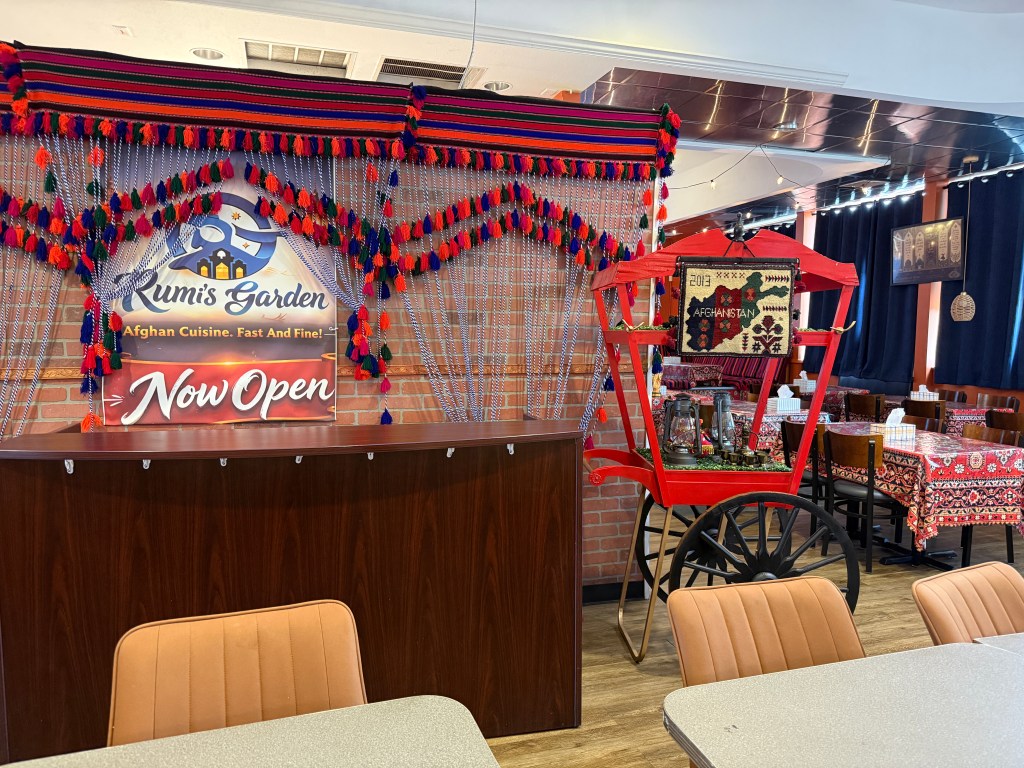
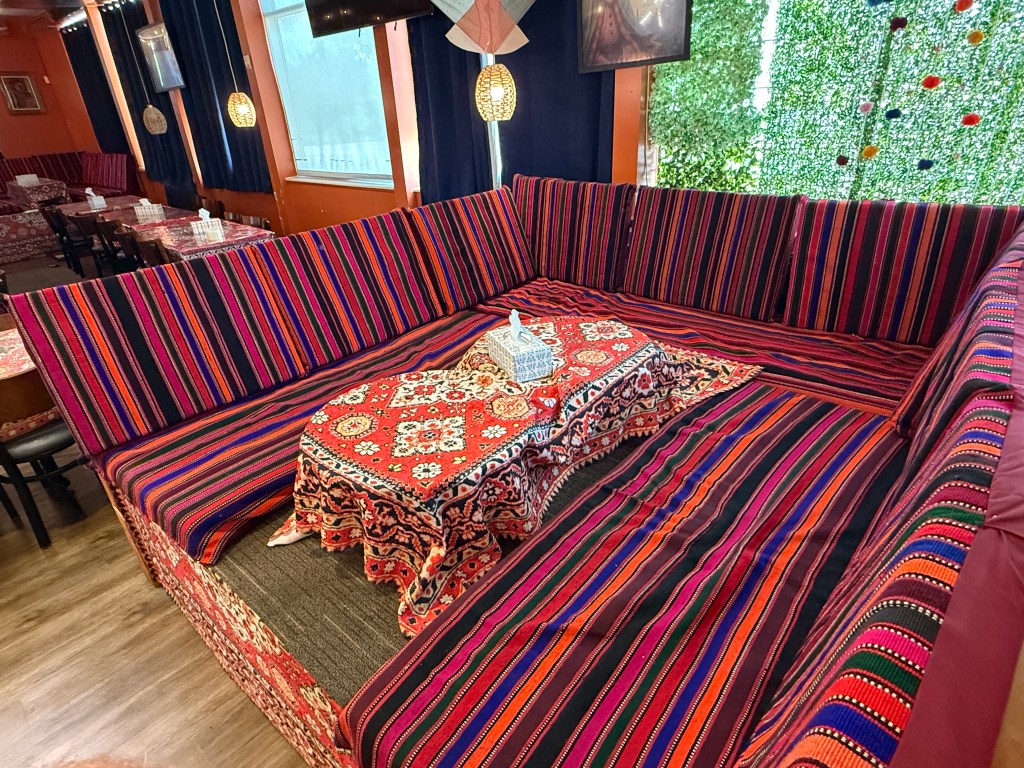
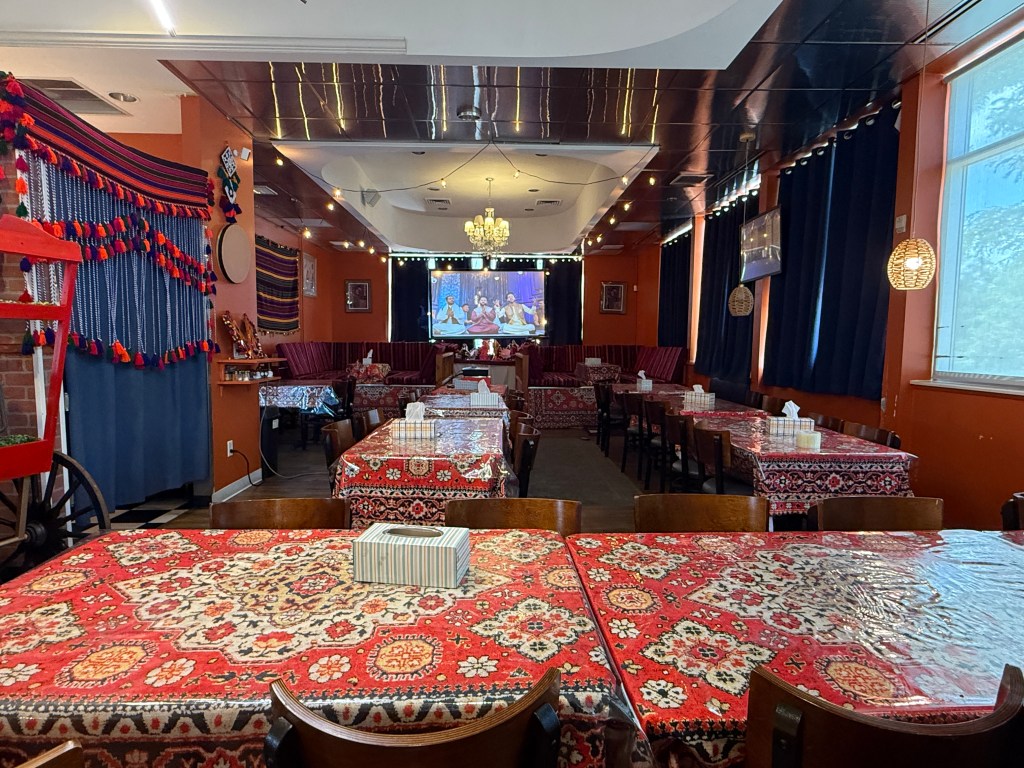
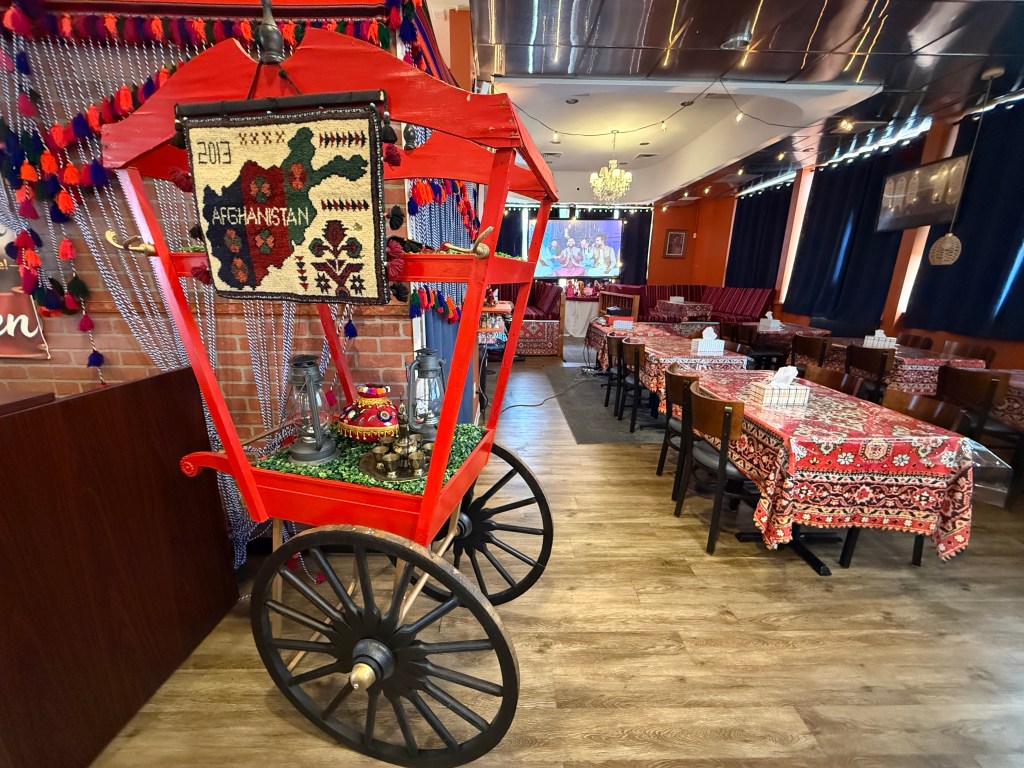
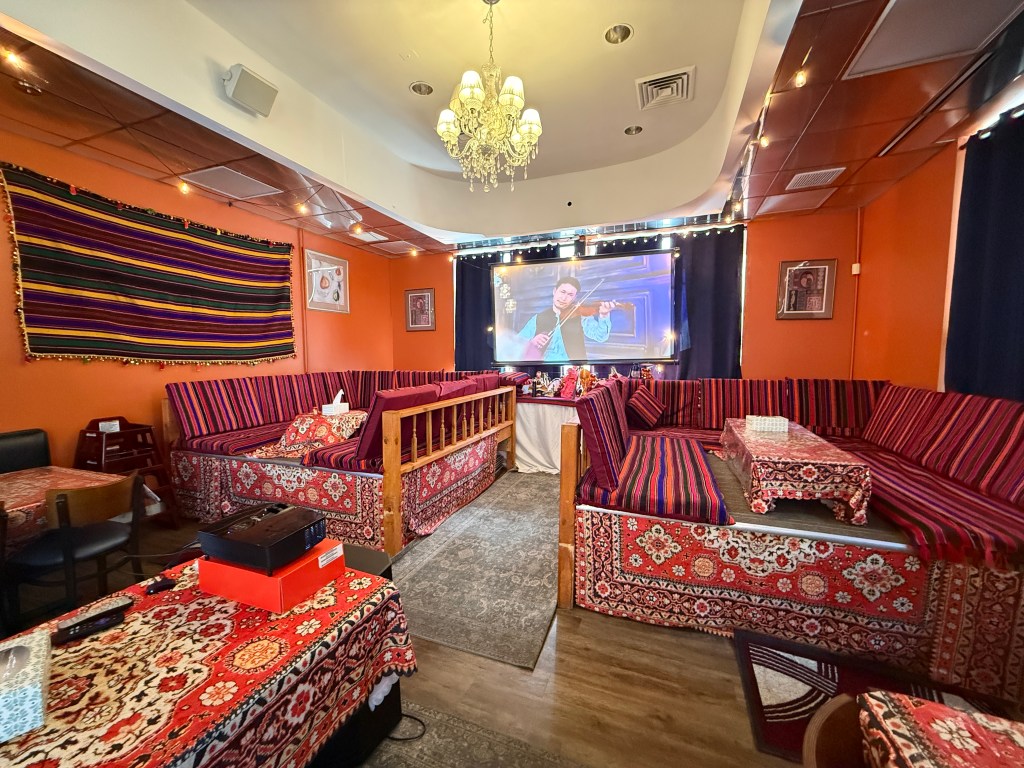
Basically, the two owners split the restaurant into two halves. Curry Leaf operates on the left side, while Rumi’s Garden set up shop on the right side. Ali had done an incredible job with his space, going all out to not only build the large, traditional Afghan takhts, but really set the vibe with vibrant colors and modern Middle Eastern music videos playing off a projector screen. Ali was extremely hospitable and kind, welcoming me in and showing me around his space. He explained some of the cultural aspects of the designs and traditional seating booths on raised platforms, emphasizing the need for spaces where people can unwind and feel connected or introduced to Afghan culture.
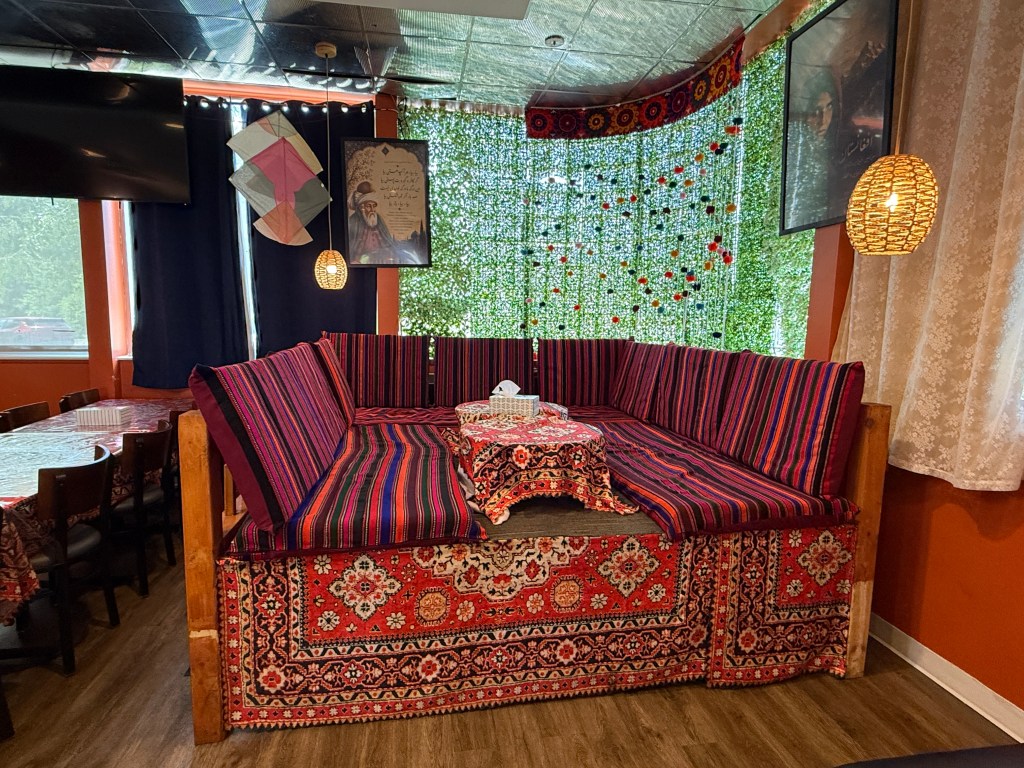
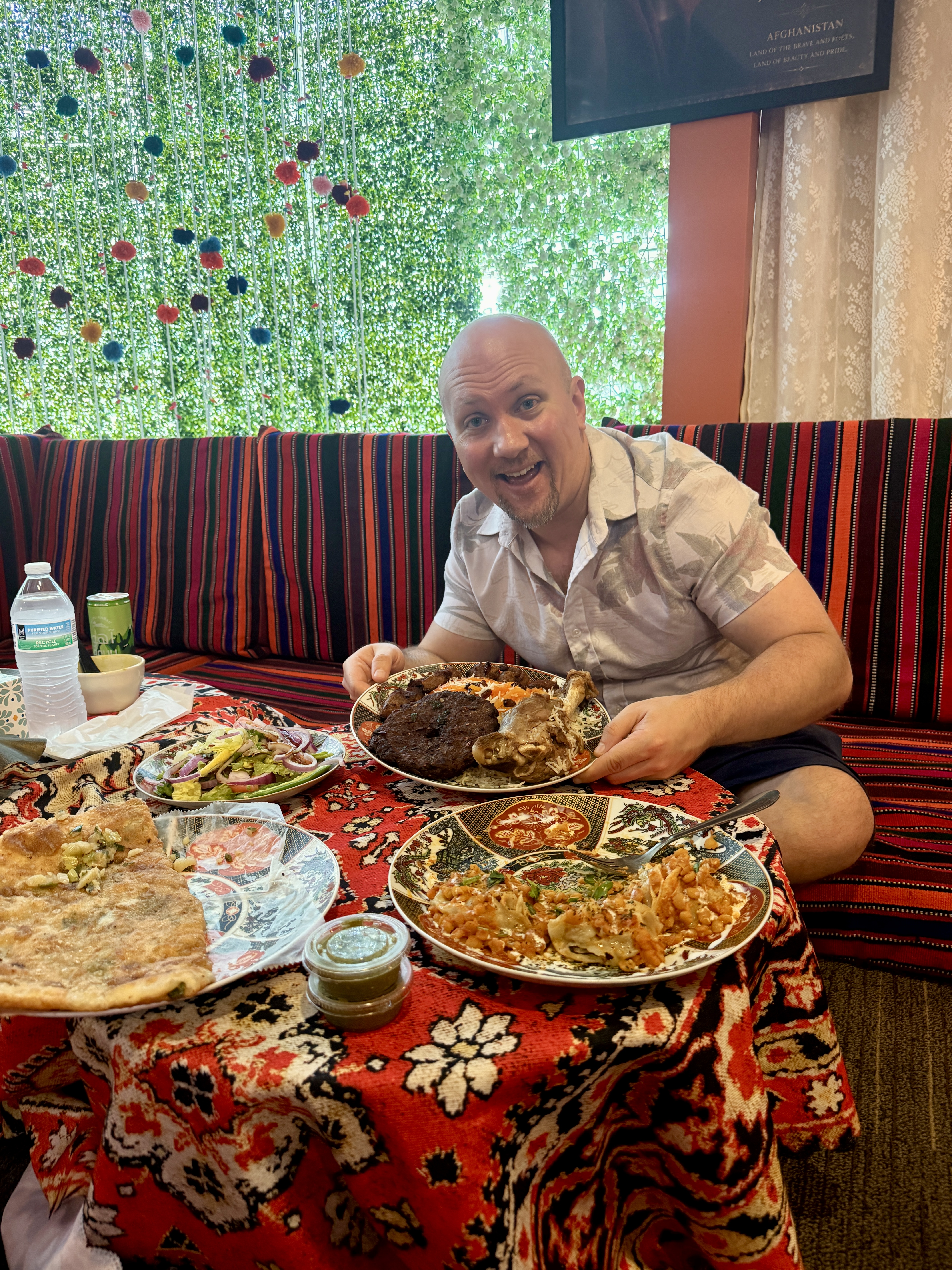
I excitedly sat at one of the corner takhts, which is a traditional raised, platform-style seating where diners sit cross-legged or lounge on cushions. This is also commonly found in Persian and Central Asian teahouses and restaurants, designed around the concept of sharing meals, platters or drinks among groups of people. Or, you can post up solo and fill the table with glorious plates of food all for you! Which, as you’re about to see, is exactly what I did upon this foodie adventure!
The Food
I was a fan of the low table and lounge-styled vibe. I felt very relaxed and enjoyed experiencing something very new for my foodie adventures. Typically, these takhts are meant to be very communal, so the tables are placed in the center so that everyone can access and share. Ali had already identified several items for me that he wanted me to try; several were signature and traditional Afghan dishes. I was excited because I knew I would be getting to try Rumi’s Garden rendition of Mantu, the iconic delicious and colorfully presented steamed dumplings. After such a long drive, however, Ali knew just what I needed to get kickstarted for this foodie adventure.
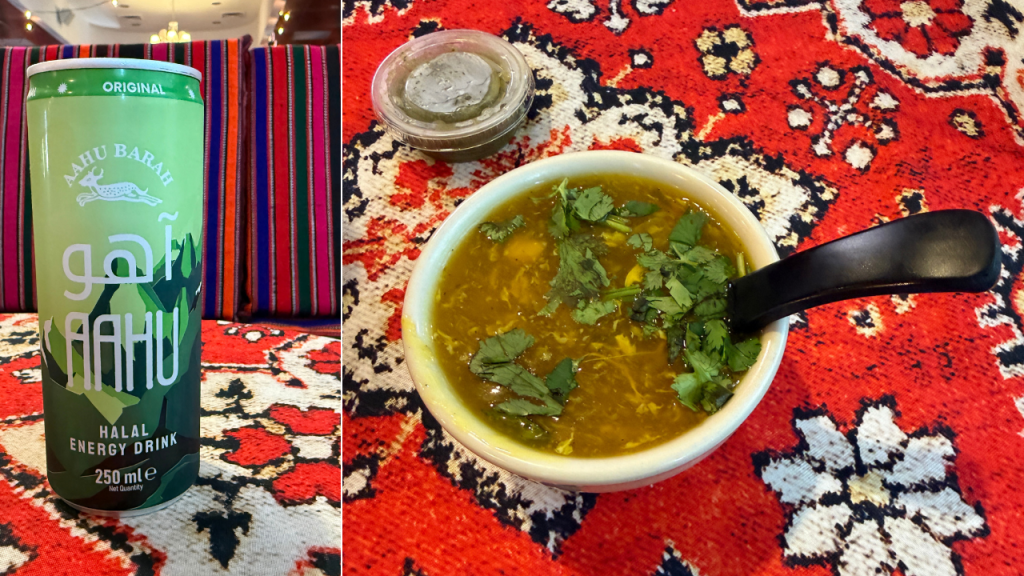
After getting situated, Ali came by my table to start things off with a bowl of Chicken Soup and a halal energy drink made by Aahu Barah. The energy drink was definitely needed and hit the spot after a two and a half hour drive. I wasn’t familiar with this brand prior, but knew they sold several other products like rice and teas. It turns out, Aahu Barah manufactures in Turkey but has an Afghan heritage background. It was crisp and a solid afternoon pick-me-up.
The Chicken Soup was the perfect launch for this food adventure, just absolutely bursting with spices and flavors that elevated this traditional soup into a unique culinary gem. The soup was very simple in terms of ingredients, letting the flavors do all the talking. The soup contained quite a copious amount of shredded chicken, onions, spices, cilantro, and savory broth. The chicken was delicious, and the broth was exploding with zesty flavors and spices that were bold and new to me. This was a very hearty soup with an Afghan influence from the seasonings that left me craving more. But this was only the first round, so once I made it halfway through, I decided to reserve my remaining appetite for the oncoming waves of Afghan cuisine!
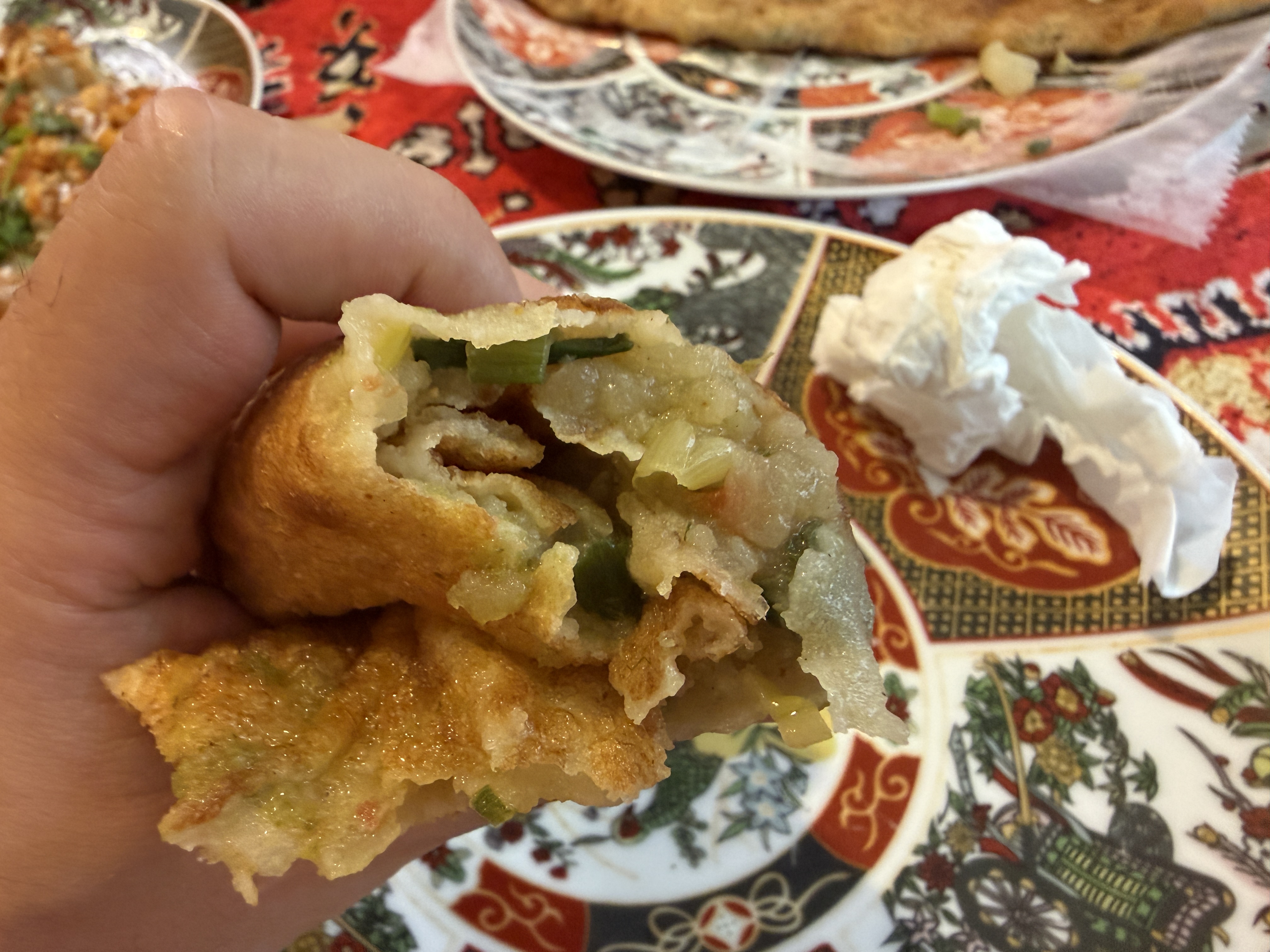
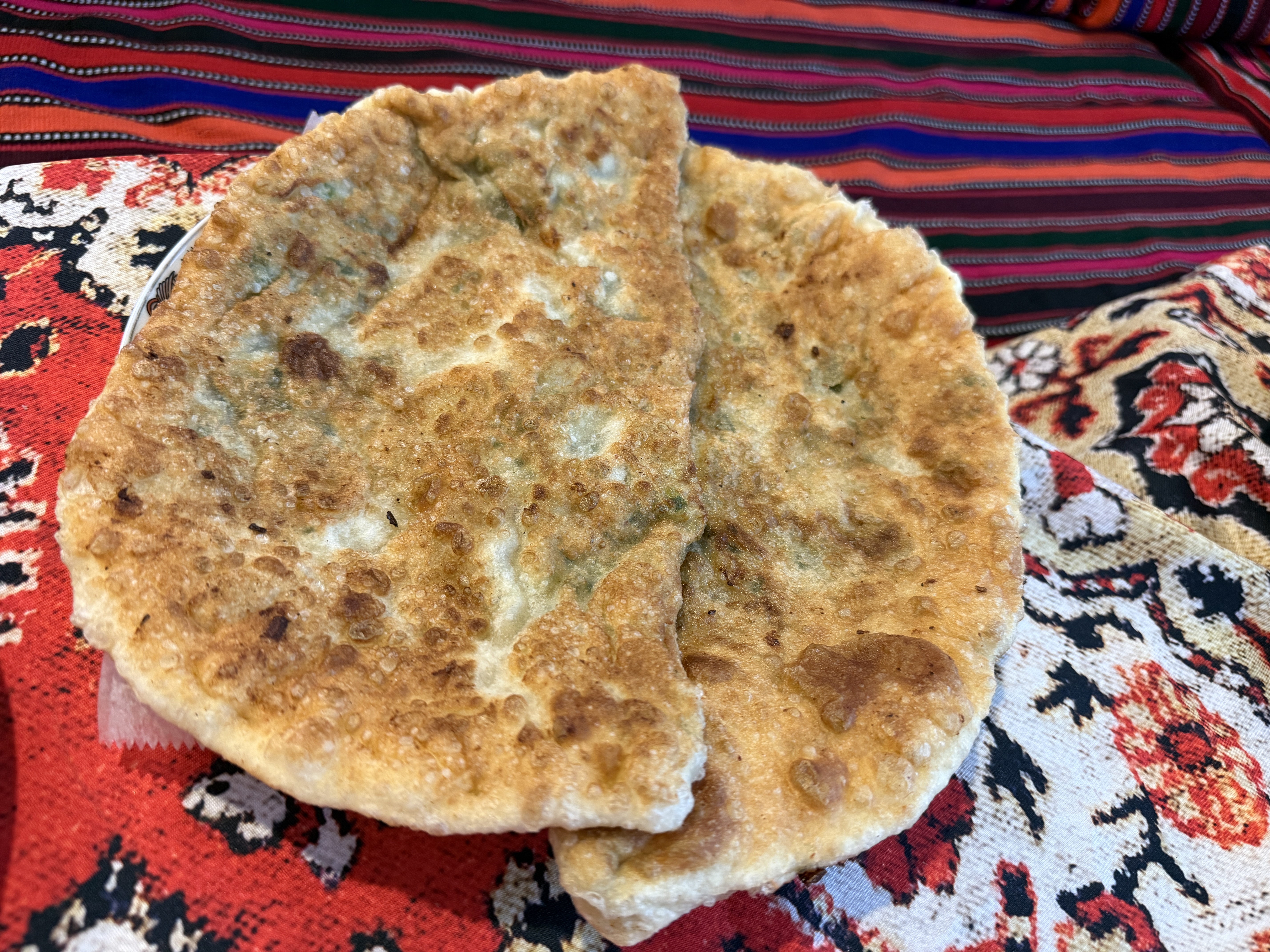
Ali came by with another wave of food, this time with Afghanistan’s traditional Pakawra, or Pakora, which are crispy, spiced vegetable fritters. They are made up of various ingredients, but usually with potatoes, onions, peppers, and zucchini deep-fried in a seasoned chickpea or flour batter. As you can see from the photos above, Ali and his staff achieved a beautiful golden fry, with the Pakora having the consistency and texture of a crispy, yet lightly baked bread. Not only did the Pakora feel light and airy, but the aromas of the fried onions, potato, and zucchini emanating from within started to make my mouth salivate before even taking my first bite.
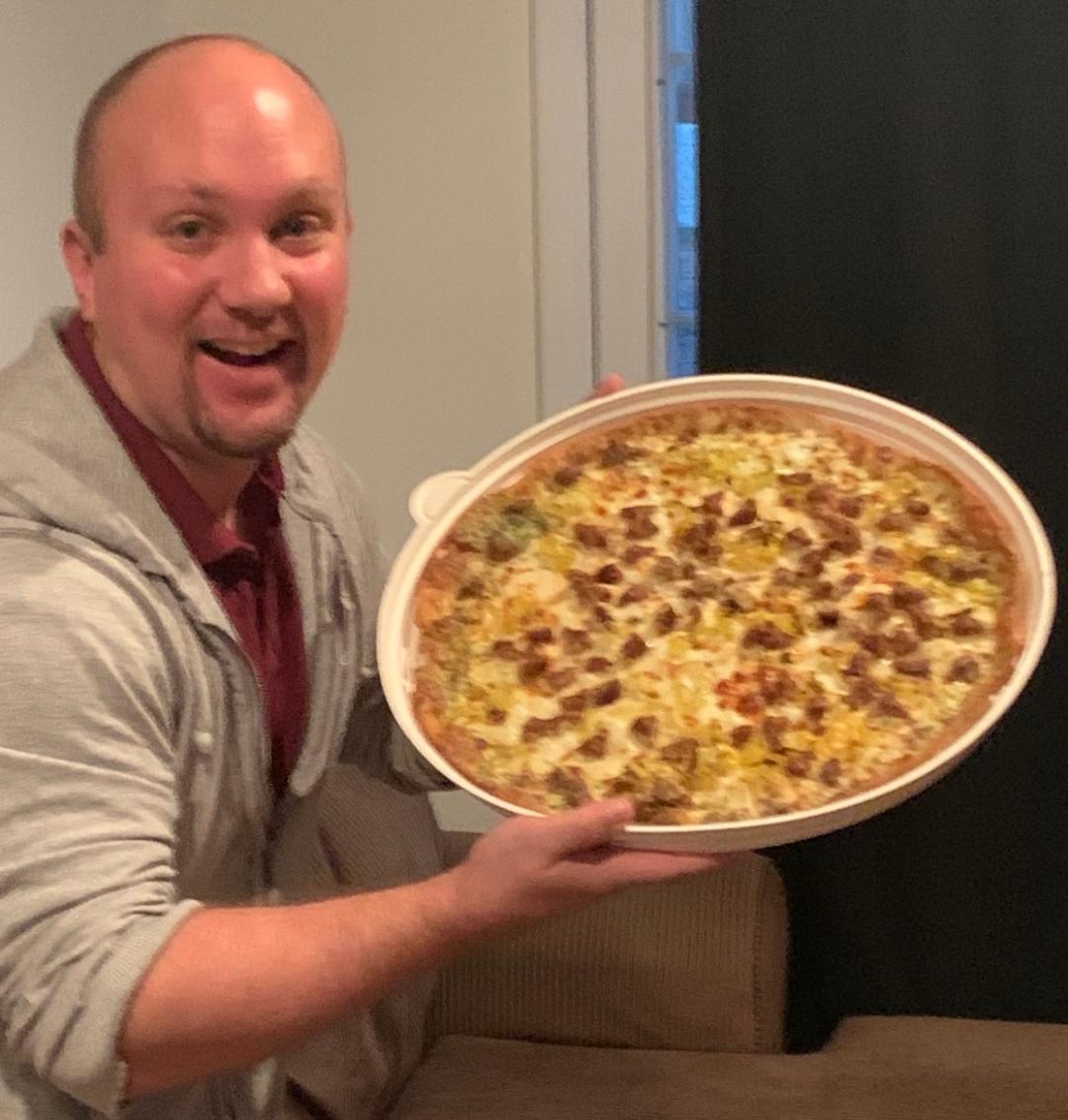
I ripped off chunks at a time by hand, again choosing to go with the more traditional route of Afghan dining and experience. The batter had that perfect light crisp to it, not quite at crunch-level but enough to make its texture and flavors known before the interior ingredients introduce themselves to your palate. The onions and zucchini were very notable, and I really enjoyed eating this delicious snack/appetizer. I was impressed by the serving size for the order, which, between the two half-moon slices, comes out roughly the size of a medium pizza. For veggie enthusiasts, or anyone who enjoys a light but fun-to-eat starter, this is a great menu option to enjoy!
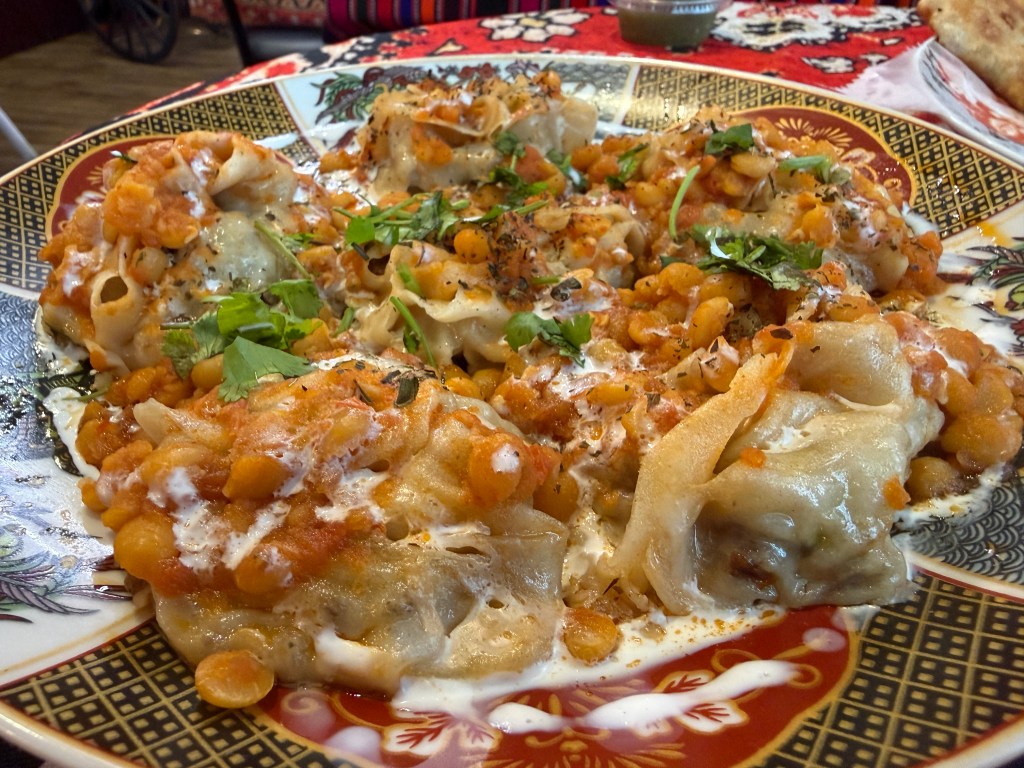
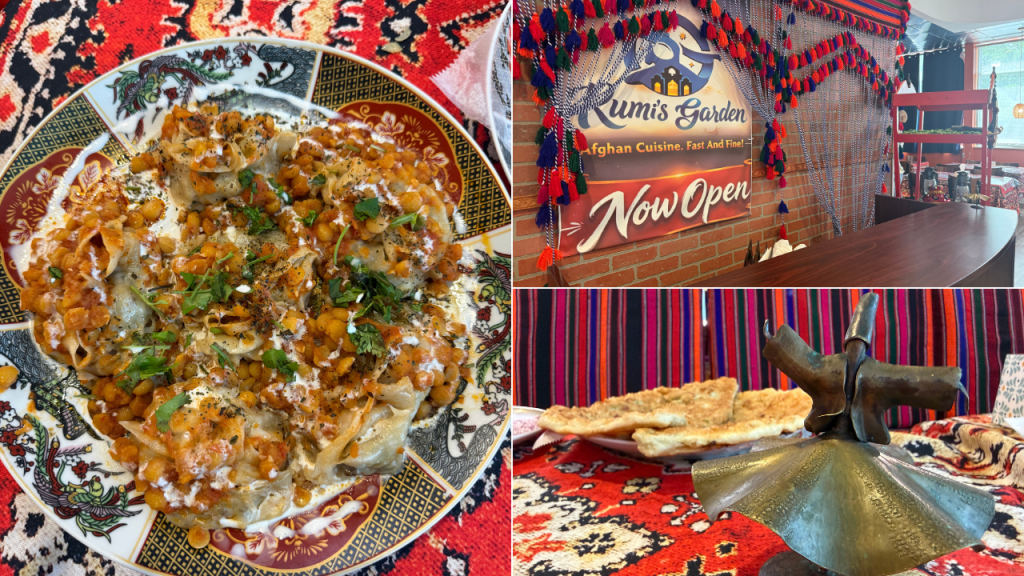
My favorite Afghan dish was up next: the Mantu! These are traditional Afghan steamed dumplings, stuffed with spiced minced beef and onions, topped with a layer of yogurt, savory lentil sauce, and microgreens. As you may recall from my adventure to Ariana Afghan Restaurant, the Mantu dish there was my favorite. I was first introduced to Mantu at an Afghan restaurant in Phoenix many years ago, Khyber Halal, and it remains one of my favorite renditions of steamed dumplings to this day. So, I was very excited to experience Ali’s rendition at Rumi’s Garden!
FULL SECTION: MI Foodie Adventures Middle Eastern Series
Sure enough, Rumi’s Garden did not disappoint on the iconic Afghan dish. As Ali noted, the dumplings themselves were hand-rolled and made in-house, and you could tell by the sheer size and quality, made via a labor of love for the craft. These dumplings were packed to the brim and loaded with juicy meat and another impactful blend of spices and seasonings. Huge shout to Rumi’s Garden for not shying away with the meat portioning, because they really made these dumplings feel like a homemade experience. The yogurt and lentil sauces were light, allowing the dumplings more room to breathe and take center stage, while still adding their own sweet and garlicky elements. Even the microgreens, lentils themselves, and garnishing seasonings added a refreshing veggie contrast to the hearty beef-packed dumplings. All in all, an outstanding rendition of Mantu, and something you must order and try at Rumi’s Garden.
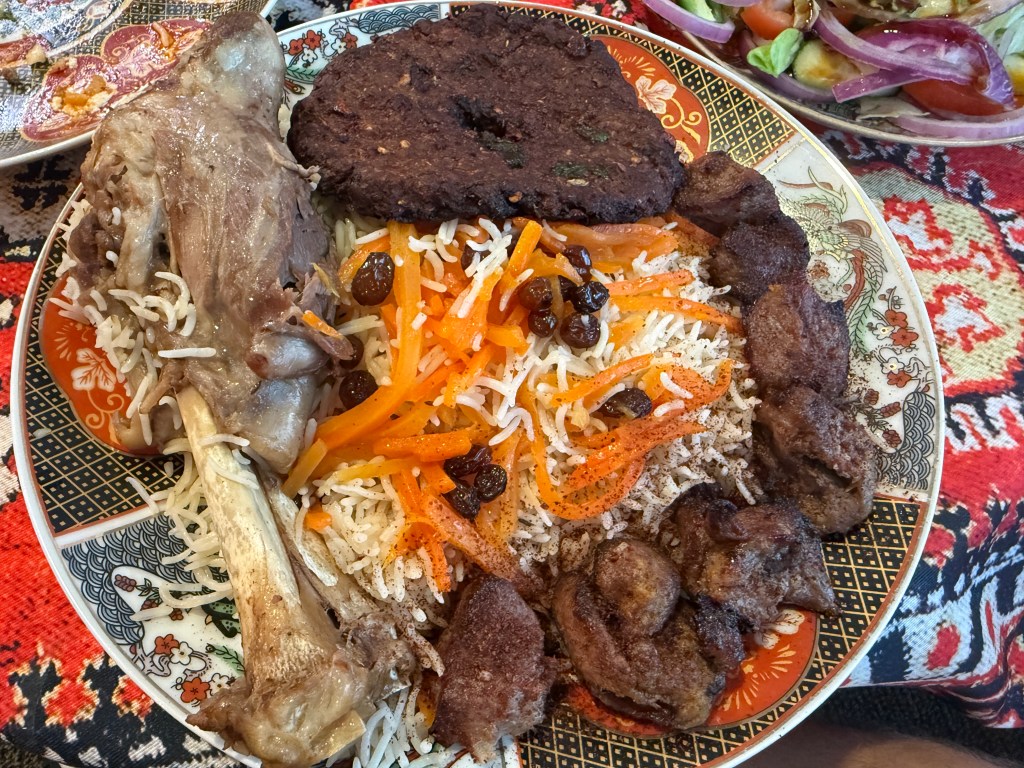
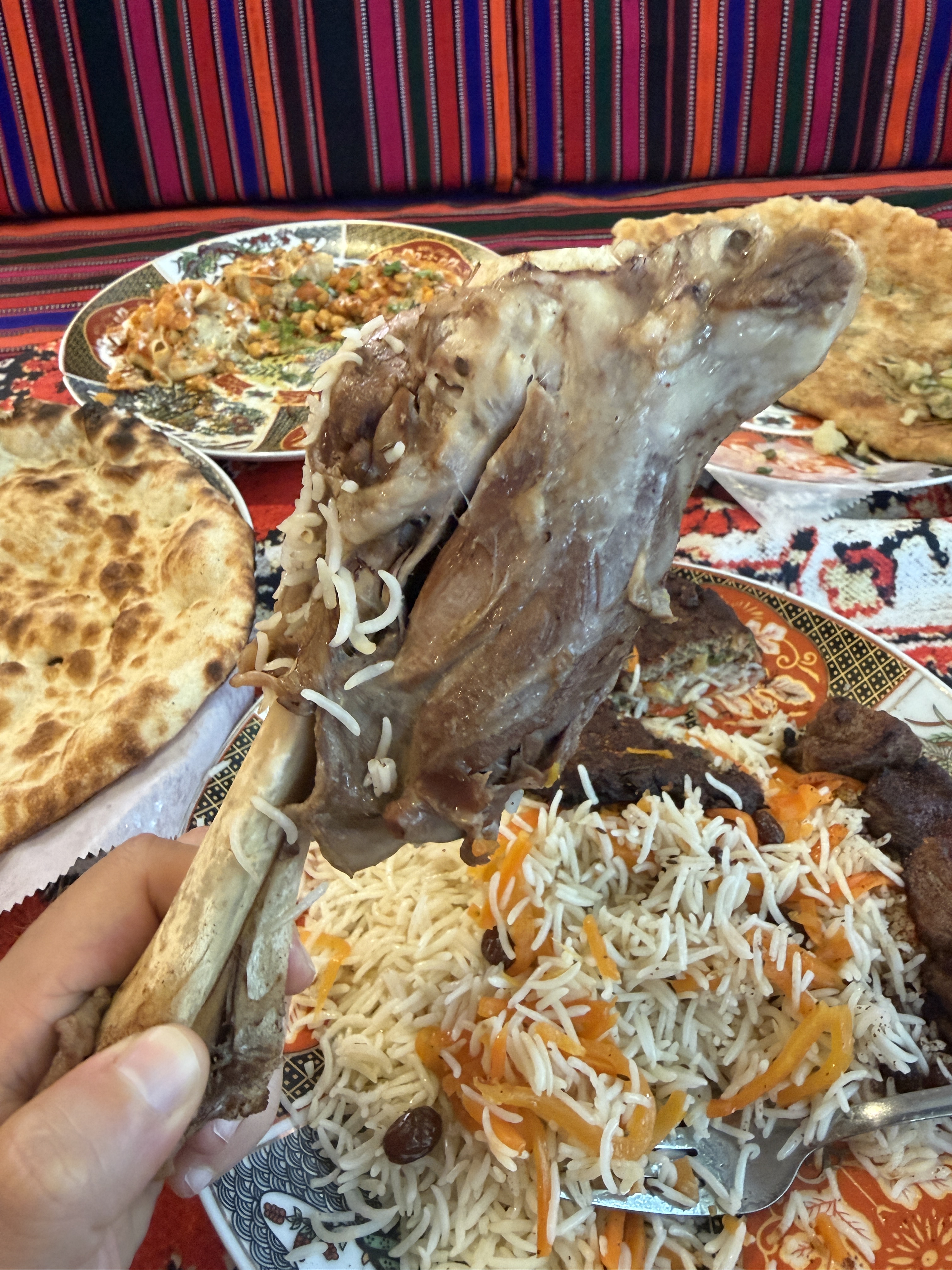
The next and final round came close to topping the Mantu, but at the very least, it definitely tied. It was one of the Family Feast Platters, dedicated to lamb served three different ways! The massive plate came with a huge lamb shank, lamb kebabs, and a heavily seasoned lamb patty, all encompassing a huge serving of kabuli pulao in the center. Kabuli pulao is a variety of pilaf made with basmati rice, sliced carrots, and raisins. This popular Afghan dish is commonly served with tender meats or on its own because it’s simply quite awesome.
Obviously, I had to start with the eye-catching and hefty lamb shank. The lamb was cooked perfectly and was insanely tender, easily pulling off the bone. It was very tasty, with the meat and scoops of the kabuli really sending it for this dish. The rice was perfectly fluffy, even maintaining a slight, sticky softness. The sweet, caramelized carrots and raisins were another great contrast to the more savory and salty meat.
I quickly devoured the lamb patty next, enjoying the seasonings sprinkled on and within the thin patty. Although it was thin, the entire patty was flavorful in every bite, and another fun but different way to enjoy the lamb. I ate a couple pieces of the lamb kebabs, since by this point I was getting rather full, and again enjoyed the slightly different way in which the lamb was delivered. The kebabs had the grill chars and different textures as a result, more crispy and slightly chewier than the previous two lamb variations, but just as delicious. I could tell slightly different seasonings were used for each, but with each making sense for the variation in which it was prepared and served. The kebabs were no different, really bringing home the summer grill-out vibe and exceptional taste. I was beyond stuffed, but, in the case of Rumi’s Garden, couldn’t be happier to be taking home (or, in this case, hotel room) leftovers.
The Interview
After dining, I caught up with Ali to learn a little bit more about his passion project and what he hopes to share with his community about his culture and cuisine. I started off by asking Ali about his personal journey that got him to this point.
“I moved to the States back in 2010, here in Grand Rapids. We’re originally from Afghanistan; we came here through Pakistan as a refugee family, and I’ve been here ever since. I just fell in love with Grand Rapids, the community, the people. And then I went through school and all that stuff, and over the years I found that there’s a lack of diversity where I wanted to kind of showcase my culture and then give back to the community that has been so great to me over the years,” explained Ali. “So having Rumi’s Garden will be an opportunity for me to express my culture but also build a community of people that fall in love with the food but also the Afghan hospitality side of things as well.”
I could certainly attest to that hospitality after such top-tier service and meals served by Ali and his staff. Ali was a gracious host and was very passionate when speaking about all of his hopes and goals he had for Rumi’s Garden. I’m always personally inspired when I meet entrepreneurs who are in their flow state and following their dreams. You can tell Ali really cares about this community endeavor. His menu and quality of dishes definitely demonstrate that level of passion equally.

Having truly enjoyed such a welcoming service and dinner, I followed up by asking Ali what kind of experiences should guests expect when they visit Rumi’s Garden.
“Rumi’s Garden is for people to feel very friendly coming in, building hospitality; money comes down to the bottom of my priority list. It’s about experiences that people want to live and learn a little bit about the Afghan culture in general, and how things have gone. I’ve gone through a lot of countries. I have a lot of experience with a lot of different people over the years, and I want to share some of that with people and have them know a little bit more about the other side of the continent that not a lot of people get an opportunity to go visit,” Ali stated.
I then asked Ali to break down the influences and core of Afghan cuisine, and what some of the more traditional dishes might consist of.
“I think our food is quite unique because it’s a mix. This is what I tell people: Afghanistan is in an area surrounded by Middle Eastern countries and by Asian countries and by Russia as well. So, over the years, we have been culturally influenced by a lot of different things, so we have a lot of different variations that we serve,” Ali said. “It’s very unique the kind of flavors we do. The platter for two is like a mix of kebabs of lamb, chicken, lamb shank and kebab. A lot of people come here just for that, for that experience.”
Having just experienced the aforementioned platter for two (yay for Sunday morning leftovers and hotel fridges!) and other Afghan meals, I came to the conclusion that this is a cuisine I need to enjoy more often. There really is such a unique blending of flavors, spices and cross-regional cultural dishes. Between the insanely delicious flavors, passionate cooking and dish execution, this was a remarkable meal and all-around dinner experience for me.
I rounded out the interview by asking what having Rumi’s Garden means to him and what impact he hopes it will have in the community.
“What we have here is very special. This is a family-run business. We put our heart and blood into this one, but we really want people to come and try it and then just learn a little bit more about Afghanistan. There’s a lot of hate right now around the world, but we can try to see the positive side of things, be more optimistic, be more positive. It’s the kind of goal that we are aiming for,” said Ali. “I suffered a lot before coming to this state. That’s why being in this state is such a privilege to be here and having that freedom. Knowing that kind of fills my heart. And then that’s why I have built this establishment, for giving back to the community as well as being a place for unity as well.”
I chatted with Ali for a bit afterward and then departed with leftovers in hand to go check into my hotel. I set my leftovers inside my car and took some exterior photos and videos, checking out Ali’s food truck in the back, which was getting stocked up for the event. I was very grateful for Ali’s invite to his restaurant, especially for the outstanding service and exceptional food. Every wave of food was as good as the next, and everything was perfect!
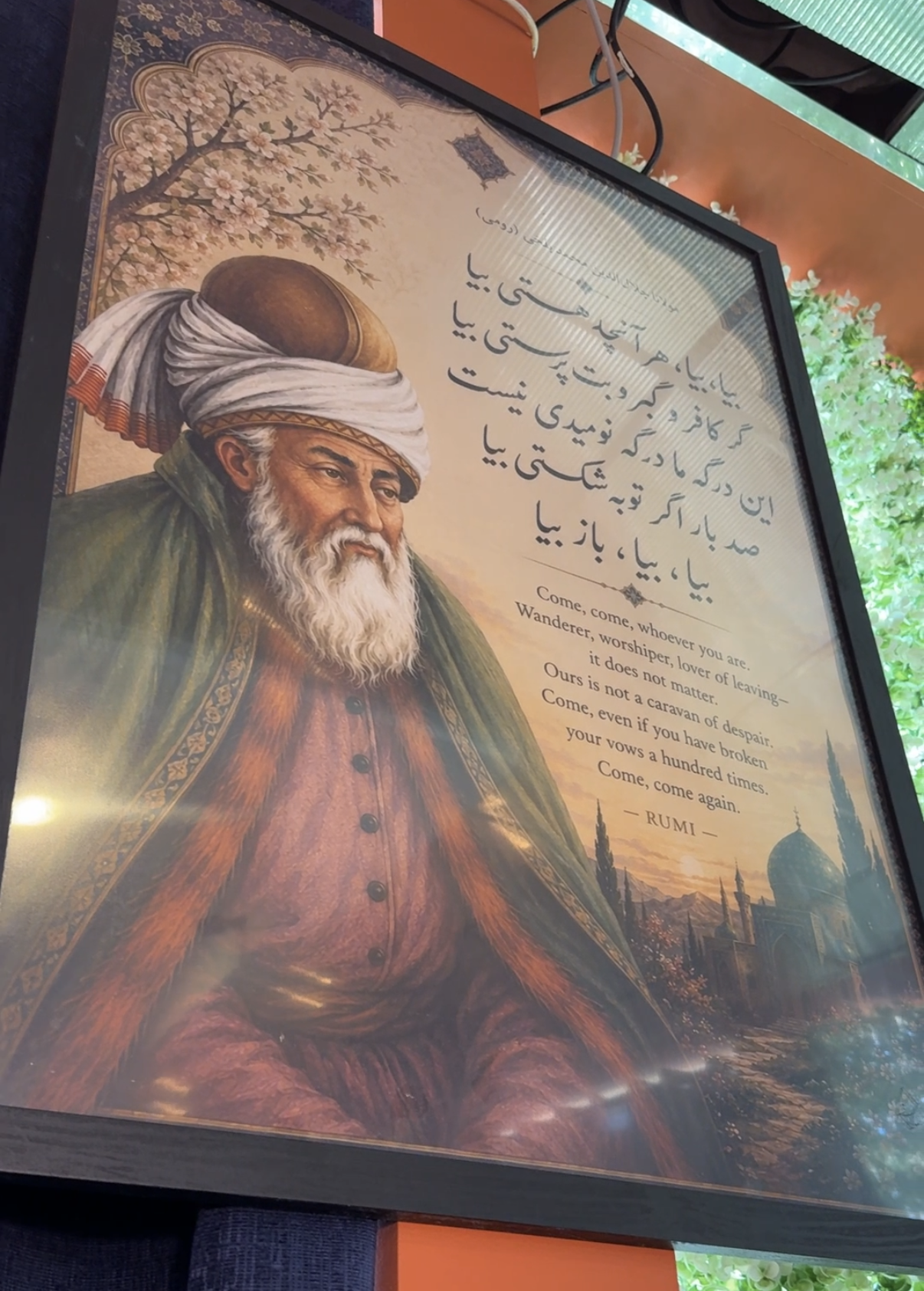
Ali was a great host and shared with me the inspiration for his establishment, Rumi, who was a Sufi poet born in Afghanistan in the early 1200s. In fact, on the wall next to my takht was a large portrait of Rumi and one of his famous quotes.
I learned a lot during this foodie adventure, which made the experience all the more worth it. I drove off very appreciative of this foodie adventure, and very full! If you find yourself in the Grand Rapids area and are open to new culinary and cultural experiences, I’d highly recommend checking out Rumi’s Garden for the phenomenal food and joyful, positive experience.
For more information about Rumi’s Garden, click here.

